Browsed by
Category: Context

Video: Tribute to Political Prisoners January 1, 2021

Video: Tribute to Political Prisoners January 1, 2021


en / hindi | 6min | 2021

By National Alliance of People’s Movements

As we enter a new year, 2021, full of challenges and possibilities, we look back and remember many of our comrades and follow-travellers who remain incarcerated and persecuted. Their only ‘crime’: trying to make this country a better place, with rights and justice for all of us, especially for those marginalized and oppressed.
To that spirit of resistance and resilience, we dedicate this video and our energies over the coming year. Stand with all those persecuted, jailed and vilified for standing with the human rights of others.
#FreeAllPoliticalPrisoners #EndStateRepression

In solidarity,
National Alliance of People’s Movements (NAPM)

Watch video

What India Lost in 2020

What India Lost in 2020

What India Lost in 2020

30/12/2020

The Wire / by Zobia Salam

There’s little room for doubt about one thing: 2020 was, undeniably, the year of loss. A loss of time, opportunity, plans, possibilities but above all, of lives.
In many ways, 2020 has been a surreal year. Some have called it the ‘longest year in existence’. For others, months flew by like minutes.
Read more


An accidental, anecdotal year appears like a planned sequence with majoritarianism as prelude and chorus

30/12/2020

The Leaflet by Shiv Visvanathan

A year ends in emptiness and the media will not notice it. India has become a post-truth regime in 2021. If that statement is antinational so be it as a tribute to all the great dissenters languishing in jail. It is Sudha Bharadwaj and Stan Swamy who might redeem this year, says Shiv Visvanathan.
Read more

The Dissenting and Defiant Citizen Is Indian of the Year / The Cost of Voicing Dissent

The Dissenting and Defiant Citizen Is Indian of the Year / The Cost of Voicing Dissent

The Dissenting and Defiant Citizen Is Indian of the Year

26/12/2020

The Wire / by Sidharth Bhatia

Whether at Shaheen Bagh or on the highways outside Delhi, Indians are standing up for dignity and rights for all.
In an environment where dissidence is considered an act of rebellion, even sedition, where people are thrown into jail for standing up for rights, and where even a cartoon or a joke can get the politicians riled up, some Indians have let it be known that they will not get cowed down. Especially when it comes to matters of dignity and livelihood.
Read more


The cost of voicing dissent: UAPA against G.N. Saibaba, Gautam Navlakha, Father Stan Swamy and others

26/12/2020

Countercurrents / by Kunal Pant

… UAPA has been disproportionately targeted against minorities (Muslims, Dalits, Adivasis), activists, human rights defenders and political opponents… UAPA has been disproportionately targeted against minorities (Muslims, Dalits, Adivasis), activists, human rights defenders and political opponents… Cases in point are Sudhir Dhawale, Surendra Gadling, Shoma Sen, Mahesh Raut, and Rona Wilson – all Dalit activists – allegedly for being associated with the “Elgar Parishad.” (Bhima Koregaon).
Read more


A Lookback At Arrests Made Under The UAPA

25/12/2020

Mumbai Live / by Mumbai Live Team

As 2020 nears towards the end, we look back at three of the arrests that have been made under the anti-terror law by the name Unlawful Activities (Prevention) Act (UAPA), introduced by Prime Minister Narendra Modi.
Read more

Shifting burden of proof

Shifting burden of proof

Orissa Post / by Aakar Patel

Uttar Pradesh´s law banning interfaith marriages also carries forward another innovative feature of India´s legal system in these present times. This is the shifting of burden of proof from the State to the accused. The `innocent until proven guilty´ maxim that under pins all law has been stood on its head and it is for the individual to prove their innocence to the State, which assumes that they are guilty…
Once the State has branded you a terrorist then UAPA requires you to prove your innocence even to secure bail.
Read more

For those dividing Indians to rule them, adivasis are clearly not farmers / Video: Protesting farmers

For those dividing Indians to rule them, adivasis are clearly not farmers / Video: Protesting farmers


Drawing by Arun Ferreira

The Wire / by Nandini Sundar

The Bharatiya Kisan Union (Ekta Ugrahan) decided to mark December 10, International Human Rights Day, by remembering several prominent activists arrested under the Unlawful Activities (Prevention) Act (UAPA), especially those arrested in the name of Bhima Koregaon, and the protests against the Citizenship (Amendment) Act…
Mahesh Raut, one of the youngest of those arrested in the Bhima Koregaon case, is a graduate of TISS and was a PM Rural Development Fellow in Gadchiroli.
Read more


Video: Protesting Farmers Demand Release of Arrested Intellectuals and Activists


hindi | 11:30min | 2020

The Wire / by Ajoy Ashirwad Mahaprashasta

Why do farmers wish to broaden the scope of their protest?
Farmers protesting at the border on International Human Rights Day demanded the release of all activists who have been arrested. The Wire‘s Political Affairs Editor Ajoy Ashirwad Mahaprashasta spoke to the farmers to find out why they wished to broaden the scope of their protest.
Watch video

Principles and norms laid down in the Constitution of India / Save Our Constitution

Principles and norms laid down in the Constitution of India / Save Our Constitution


Delhi, 2019

Is India governed by the principles and norms laid down in the Constitution of India

29/11/2020

The Leaflet / by Jacob Peenikaparambil

The Constitution of India was adopted more than two years after independence from British rule. It provided a common vision and set goals towards which both the government and people of India could strive as well as the foundational principles of governance of a nation.
Along with celebrations, this day is also for introspection for Indians. How far has the vision and goals of the constitution been realised? …
Dissent is demonised as anti-national by the government and the ruling party. The judiciary that is entrusted with the task of protecting the fundamental rights of the citizens is often shirking from its responsibilities.
Read more


Save Our Constitution

29/11/2020

The Leaflet / by Cedric Prakash

In times when the Supreme Court is selectively granting relief for wide-scale violation of constitutional rights, it is important to save the constitution by saving the Article which embodied the heart and soul of the Constitution according to Dr Ambedkar i.e Art 32…
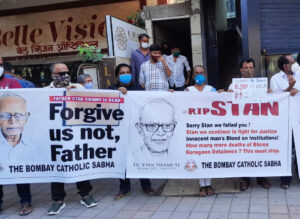
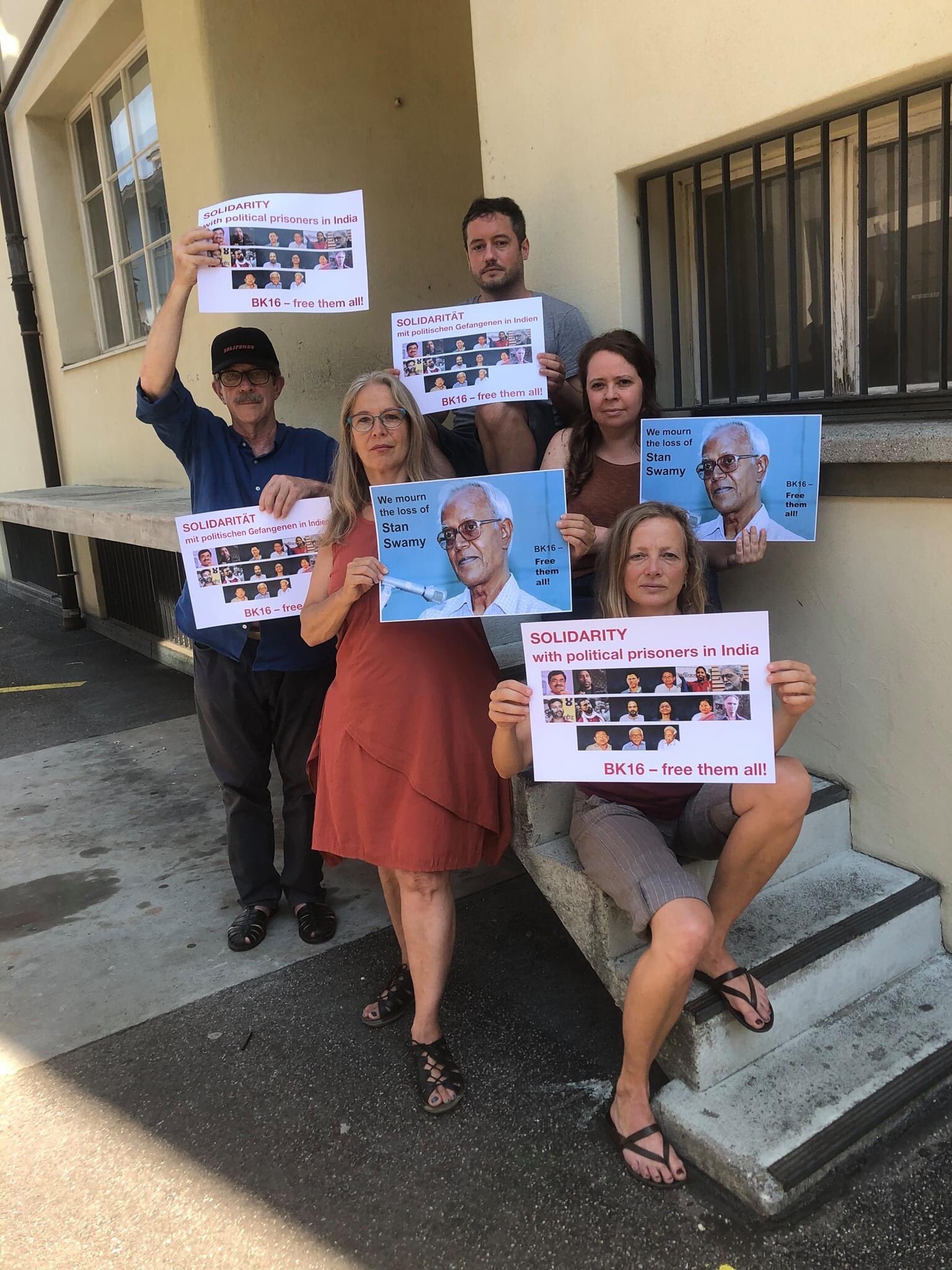
Fr Stan Swamy and fifteen others who are ‘allegedly’ involved in the Bhima-Koregaon conspiracy case are in jail- some of them languishing for more than two years now. Besides these, there are several others imprisoned under the UAPA, and were also charged and arrested on the archaic ‘sedition’ law and even on ‘contempt of court’.
Read more

SC Has Let People Down, Abdicated Duty to Defend Fundamental Rights: Justice A.P. Shah

SC Has Let People Down, Abdicated Duty to Defend Fundamental Rights: Justice A.P. Shah

The Wire / by Karan Thapar

In one of the sharpest criticisms of the Supreme Court made by one of India’s most highly regarded retired judges, the former Chief Justice of the Delhi and Madras high courts has said that “to a large extent the Supreme Court is letting down the people of India”.
Justice Ajit Prakash Shah said the Supreme Court has “completely abdicated its duty to defend fundamental rights” and added that this will “affect the credibility of the Court and its prestige”.
Read more


Video: SC Has Let People Down, Abdicated Duty to Defend Fundamental Rights, says Justice A.P. Shah


en | 51:32min | 2020
Watch video

UAPA and the growing crisis of judicial credibility in India

UAPA and the growing crisis of judicial credibility in India

Observer Research Foundation / by Niranjan Sahoo & Jibran Khan

The Democracy Report 2020 by V-Dem Institute created quite a storm recently in India’s policy circles. The report claimed that the world’s largest democracy is on the verge of losing its status as a democracy. Noting India’s rapid slide into an autocracy, the Sweden-based report, which produces the most comprehensive analyses on the health of democracy across the world, cited trends of dramatic erosion of basic civil liberties, particularly media freedom and suppression of the freedoms of free speech and dissent as the key reasons for this major dip…
The last two years, in particular, have witnessed a sharp rise in the arrests of several prominent human rights defenders, civil society leaders, agitating leaders and even protesting students under the UAPA and sedition laws, including Sudha Bharadwaj, Vernon Gonsalves, Arun Ferreira, Varavara Rao, Anand Teltumde, Gautam Navlakha, and Arun Ferreira.
Read more

Unfair To Target A Lawyer For Appearing For A Particular Client: Justice Lokur

Unfair To Target A Lawyer For Appearing For A Particular Client: Justice Lokur

‘Unfair To Target A Lawyer For Appearing For A Particular Client’: Justice Lokur

21/11/2020

Live Law / by Radhika Roy

I think that it’s unfair to target a lawyer for appearing for a particular client”, said Justice (Retd.) Madan B. Lokur, former Judge of the Supreme Court of India at a virtual session hosted by Delhi High Court Women Lawyers Forum and Women in Criminal Law Association.
“If a lawyer is dealing with hundreds of COFEPOSA cases, you can’t say that he is also a smuggler. I don’t think the Judge should ever get involved in the relationship between a lawyer and a client”, the judge commented.
Read more


Video: Justice (retd.) Madan Lokur speaks on „Defending Liberties“

20/11/2020


en | 1h 29min | 2020

By Bar & Bench

The former Supreme Court judge is speaking at a virtual discussion hosted by the Delhi High Court Women Lawyers Forum and WCLA.
Former Supreme Court Judge, Justice (retd.) Madan Lokur is speaking on the theme Defending Liberties in a virtual discussion to be hosted by the Delhi High Court Women Lawyers Forum and WCLA. Justice (retd.) Lokur will interact with Warisha Farasat, Tara Narula, Shalini Gera and Sowjhanya Shankaran during the discussion.
Watch video
Read tweets/summaries by Live Law

Why are inmates unable to access basic facilities in Indian prisons?

Why are inmates unable to access basic facilities in Indian prisons?


Drawing by Arun Ferreira

Scroll.in / by Vijayta Lalwani

According to prison manuals, jail authorities are responsible for ensuring food, clothing and health facilities to inmates.
On November 6, activist Stan Swamy filed an application in a special court in Mumbai requesting access to use a straw and a sipper… When he was arrested in Ranchi, Jharkhand, he carried a small bag with himself that contained a few of his belongings as well as a straw and a sipper, said his lawyer Sharif Sheikh. However, after the arrest, the bag was left with the National Investigation Agency, which is probing the case.
Read more