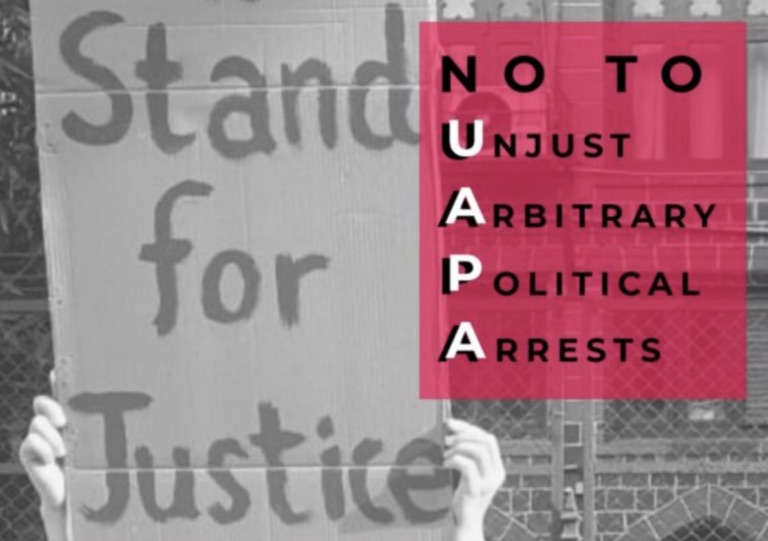
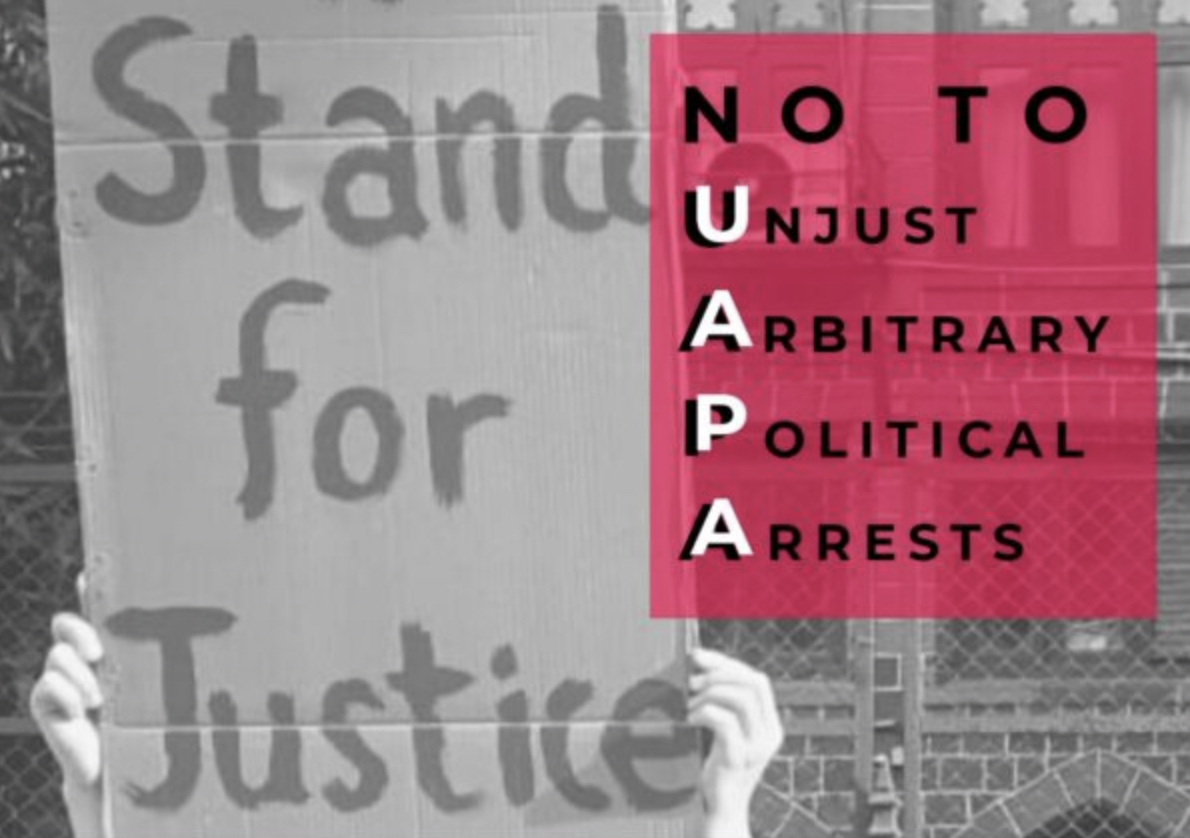
UAPA’s vague provisions, stringent bail conditions and inconsistent judicial interpretations have enabled the prolonged imprisonment of activists, scholars and journalists without trial; Prof. G.N. Saibaba’s experience shows the urgent need to reform a legal regime that undermines civil liberties, due process and rule of law
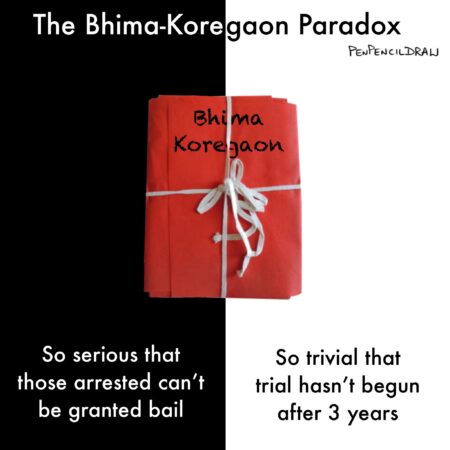
… The anniversary of Professor Saibaba’s death is an occasion to reflect on a legal regime that is designed to — quite literally — imprison dissent and deny justice. Over the years, the UAPA has been used to criminalise political opposition. Following the violence at the Bhima Koregaon commemoration event in 2018, UAPA charges were brought against 16 scholars and activists, all of whom were jailed. Eight years later, the trial has yet to begin, and the court has yet to frame charges against the accused. Read more
Front Line Defenders / by Front Line Defenders & others
We, the undersigned, are regional and international human rights nongovernmental organizations as well as individuals expressing concerns over the developments at the National Human Rights Commission of India (NHRCI).
…
Over the past decade, the NHRCI has not intervened when Indian authorities have targeted students, activists, lawyers, journalists, and critics of the government under the abusive, counterterrorism law, the Unlawful Activities Prevention Act (UAPA). This includes 16 prominent activists who promoted the rights of persons from India’s most marginalized communities, accusing them of inciting violence that occurred during a Dalit meeting in January 2018 in Bhima Koregaon in Maharashtra state. The trial is yet to begin but 15 activists arrested in the case spent years in jail before they were granted bail, while 84-year-old Stan Swamy, a prominent tribal rights activist, died in custody, which a UN expert termed as “a stain on India’s human rights record.” According to reports by the US-based forensic firm Arsenal Consulting, malware was used to surveil and plant evidence on the computers of at least three accused in this case. Read more
‘A National Hero’: Jailed Activist Umar Khalid Wins International Award For Human Rights Defenders
09/10/2026
The Wire / by The Wire Staff
A special ceremony was held at the Trinity College in Dublin, to honour all the recipients. Khalid was represented by his father, Syed Qasim Rasool Ilyas.
Activist Umar Khalid who has been jailed since the last six years has won the 2026 Front Line Defenders Award for Human Rights Defenders at Risk.
“Umar Khalid is the 2026 Asia winner of the Front Line Defenders Award. To those who try to silence his work, he is seen as an “enemy of the state’’ and an “anti-national”, but to others, he is a national hero, a voice of the people, and a human rights defender. Read more
To mark Prisoners’ Day honestly is to notice this asymmetry, not just to honor the dead of 1929. It is to ask why a nation can revere its historical political prisoners while refusing that name to those living through an almost identical experience today
On 13th September 1929, Jatin Das died in Lahore Central Jail after sixty-three days without food. He had not committed a violent act. His crime, in the eyes of the colonial state, was conviction, the belief that India should govern itself. His body, wasting through week after week of hunger strike, became the only language of protest still available to a man the state had already decided to silence through confinement rather than trial. His death is why September 13th is observed as Prisoners’ Day.
… Sharjeel Imam has been in Jail without trial since 2020. Umar Khalid’s case has moved at a similar pace. The Bhima Koregaon accused, several of them elderly, some in visibly deteriorating health, have spent years as undertrials on charges that have yet to be substantively tested in court. Read more
Umar Khalid’s six years in Tihar expose how prolonged pretrial detention under UAPA has become a means of punishing dissent, with Muslims, Dalits and Adivasis bearing a disproportionate burden.
On September 13, 2026, Umar Khalid completed six years in Tihar Jail. Not one prosecution witness has been examined.
There is a particular kind of silence that settles over a case like Umar’s. This is the silence of a system that has learned to punish without verdict, to sentence without trial, and most importantly, to convert the process itself into the penalty.
… The Bhima-Koregaon case offers a parallel indictment of the same machinery. It has been eight years since the alleged incident. Even the trial has not begun. Read more
Who Will Police the Indian Police?
13/09/2026
The Wire / by Anand Teltumbde
Police reform will remain cosmetic unless policing is made strictly accountable to the law rather than to political power.
Police are the face of the state to ordinary Indians. And that face is often one of raw terror. People encounter the state through the policeman at the street corner, the police station, the barricade or the interrogation room. As veteran journalist Kuldip Nayar once observed, the ordinary person’s first encounter with the police often begins with abuse and the danda. Read more
Serving the Powerful, Failing the Powerless
13/09/2026
Peoples Democracy / by MA Baby
Justice Deepak Gupta, a former judge of the Supreme Court, marked the eightieth anniversary of Independence by asking in print what few in his position have dared to ask; how free are we, the citizens of India?
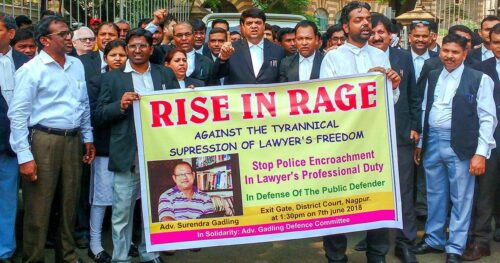
… The Bhima Koregaon prosecution is in its ninth year. Father Stan Swamy died in custody in July 2021. Surendra Gadling got bail in May 2026 after nearly eight years, only to stay in jail on a second case. Every surviving accused has now been granted bail; not one has faced trial, because charges have still not been framed, and forensic findings that the incriminating files were planted by malware have never been judicially examined. The process is the punishment, and the court’s refusal to intervene is what keeps the process alive. Read more
“The process has become the punishment”: Former SC judge Justice Deepak Gupta flags Umar Khalid’s incarceration, judicial majoritarianis
11/09/2026
Maktoob / by Maktoob
Former Supreme Court judge Justice Deepak Gupta criticised prolonged incarceration, judicial majoritarianism and courts’ failure to protect individual liberty, saying “the process has become the punishment” while citing the cases of Umar Khalid, Elgar Parishad and Sonam Wangchuk.
Former Supreme Court judge Justice Deepak Gupta criticised the judiciary’s failure to protect individual liberty, citing rights activist Umar Khalid’s prolonged incarceration and the Elgar Parishad case, and said “the process has become the punishment” as people are labelled “anti-nationals” and their lives ruined. Read more
The true meaning of freedom
06/09/2026
The Tribune / by Justice Deepak Gupta
No country can claim to be free unless it has an independent and fearless judiciary
After the marching has come to a halt, the drumrolls have fallen silent and the euphoria of India’s 80th Independence Day celebrations has lessened, I ponder, how free are we, the citizens of India?
… The accused in the Elgar Parishad case were kept behind bars for years; one died in jail. The allegations against them are said to be very serious. If so, why has the prosecution not shown the same seriousness to start the trial? Eight years have passed since the incident took place. The trial is yet to begin. Read more
The Elgar Parishad case has been transferred from Mumbai’s designated NIA court in Sessions Court No. 25 to newly notified Court No. 26. The move comes as discharge hearings were nearing completion, with several applications pending for over two years. The transfer could require arguments to be repeated, potentially delaying proceedings.
Days after the NIA court refused to cancel the bail of activists Sudha Bharadwaj, poet Varavara Rao, Vernon Gonsalves and Arun Ferreira, booked in connection with their alleged involvement in the Elgar Parishad violence case, the case has been transferred to another court. Read more
Credits: Drawing by Arun Ferreira / The Polis Project
The New Indian Express / by Kaleeswaram Raj
Asaram Bapu’s access to a full-time caregiver in jail highlights the stark disparities in India’s prison system, where many inmates struggle for medical care, dignity and even basic necessities
… Swamy’s and Saibaba’s predicaments are often cited, but many others have suffered in prison. In a 2024 paper, Bhavya Dore and Sukhada Tatke exposed the incredibly inhuman treatment, including denial of medical care, extended to political prisoners booked under the draconian Unlawful Activities (Prevention) Act, going beyond the Swamy-Saibaba tragedies. It says the prison authorities denied even a mosquito net to people accused in the Bhima Koregaon case, including Anand Teltumbde, Vernon Gonsalves, Gautam Navlakha and Sagar Gorkhe. Law teacher and activist Sudha Baradwaj and English teacher Shoma Sen were lodged along the Phansi yard in Yerwada jail, says the paper. Read more
78-year-old man named Mohammed Naeem was acquitted and cleared of all charges by a special National Investigation Agency (NIA) Court in Lucknow after a 33-year-old sedition case due to a lack of evidence. He was accused of outraging religious feelings and making imputations prejudicial to national integration. The case stemmed from an incident on Republic Day, January 26, 1993, in Gorakhpur, Uttar Pradesh.
… The Bhima Koregaon case remains one of India’s most controversial legal proceedings. The takeover and handling of the case by the National Investigation Agency (NIA) reflect a politically motivated misuse of federal investigative powers to suppress dissent. The investigation conflates peaceful human rights advocacy and tribal rights work with militant activities, labelling intellectuals and lawyers as “urban naxals”. Read more
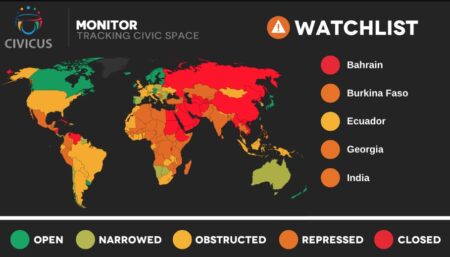
India added to human rights watchlist as repression intensifies in Modi’s third term
29/07/2026
Civicus / by CIVICUS Monitor Watchlist
– A range of legal measures are being used to jail activists, protesters, journalists and critics of the government
– Authorities are expanding censorship and surveillance powers
– NGOs face tighter funding restrictions and unprecedented government control over their operations
India has been added to the latest CIVICUS Monitor Watchlist due to a rapid deterioration in civic freedoms during Prime Minister Narendra Modi’s third term. The decline has been marked by the escalating persecution of activists, growing restrictions on independent media and civil society organisations, and the expanded misuse of anti-terror legislation and other legal measures against critics of the government. Read more
Global rights monitor CIVICUS puts India on ‘watchlist’ over civic freedoms
29/07/2026
Frontline / by Frontline News Desk
CIVICUS, which tracks freedoms across nearly 200 countries, says recent crackdowns on activists, journalists, and civil society groups point to a worsening climate for free expression and peaceful assembly.
India has been added to the latest CIVICUS Monitor Watchlist following what the organisation called a “rapid deterioration in civic freedoms” during Prime Minister Narendra Modi’s third term. According to CIVICUS, the decline has been marked by the escalating persecution of activists, growing restrictions on independent media and civil society organisations, and the expanded misuse of anti-terror legislation and other legal measures against critics of the government. Read more
CIVICUS adds India to global human rights watchlist amid rising curbs on civic freedoms
29/07/2026
Counterview / by Jag Jivan
Global civil society alliance CIVICUS has placed India on its latest CIVICUS Monitor Watchlist, citing what it describes as a rapid deterioration in civic freedoms during Prime Minister Narendra Modi’s third term in office.
The organisation says the move reflects an escalating crackdown on activists, journalists, civil society organisations and critics of the government through restrictive legislation, censorship measures and expanded state powers.
… In April 2026, the National Investigation Agency renewed investigations into activists connected to the long-running Bhima Koregaon case, despite several having already spent years in pre-trial detention before obtaining bail. Read more
India: Activists arrested, abducted and tortured, journalists targeted and laws tightened to increase control
11/06/2026
CIVICUS / by CIVICUS
India’s civic space is still rated as ‘repressed’ by the CIVICUS Monitor. The authorities persist in targeting activists, journalists, students and civil society through the misuse of draconian laws, arbitrary detention, censorship and the criminalisation of dissent. Over the past year, the Unlawful Activities (Prevention) Act (UAPA), the Foreign Contribution (Regulation) Act (FCRA), counterterrorism provisions and public order regulations have been consistently deployed to silence government critics, restrict civil society, and deter peaceful protests. Read more
Two judgments, no single standard: Why terror law UAPA’s bail threshold isn’t a straight line
21/05/2026
The Print / by Sahaj Sankaran
SC’s contradiction over bail in terror cases has revived questions over whether the stringent Watali test or the liberty-focused Najeeb ruling should guide UAPA jurisprudence.
When a two-judge Supreme Court bench Monday criticised a co-ordinate bench’s decision denying bail in January to Sharjeel Imam and Umar Khalid, both accused under the Unlawful Activities (Prevention) Act (UAPA) in the Delhi riots case, the criticism raised a much broader issue: how should courts decide on bail under the anti-terror law?
… In the the 2022 Jyoti Jagtap vs NIA case, the court did not consider Najeeb at all, implicitly arguing that Najeeb had no applicability even though the defendant had been in prison for two years by that point. It took another three years for Jagtap, arrested for her alleged ties to the organisers of the 2017 Elgar Parishad event, to secure bail. Read more
Not defending civil society judiciary’s biggest failure Advocate Indira Jaising
19/05/2026
The Week / by pti
The judiciary’s inability to protect civil society from persecution is its “biggest failure”, writes senior advocate Indira Jaising in her new book “The Constitution Is My Home”, alleging that political opponents, activists and human rights defenders are being systematically targeted through criminal law.
… Referring to the prosecution of late Delhi University professor G N Saibaba under the Unlawful Activities (Prevention) Act (UAPA), she criticised judicial observations that shifted the focus of criminal law from “overt acts to beliefs and ideas”.
She also criticised the use of the UAPA and the sedition provision under Section 124A of the Indian Penal Code against activists and human rights defenders in cases linked to the 2020 Delhi riots and the Bhima Koregaon violence. Read more
▪ Indira Jaising interview: Senior advocate sounds alarm on democracy & dissent in modern India en | 19:16min | 2026
Interview by: Kanu Sarda
Camera: Sanjay Ahlawat
Editor: Syam Krishnan
In this exclusive interview with THE WEEK, Indira Jaising discusses her new memoir, The Constitution Is My Home, and shares her thoughts on the biggest constitutional and judicial challenges facing India today. From the Bhima Koregaon case and judicial accountability to women in the Supreme Court and the criminalisation of dissent, Jaising offers a candid and deeply personal reflection on law, democracy and power. Watch video
India’s Anti-Terror Law and the Punishment of the Unconvicted
19/05/2026
Countercurrents.org / by Utkarsh Mishra
The statistics released by the government paint a troubling picture. From 2019 to 2023, India arrested 10,440 individuals using its strictest anti-terror law, but only 335 were convicted. This number didn’t come from a human rights organisation; it was shared by the Union Home Ministry itself during a session in Parliament in December 2025. The National Crime Records Bureau put together these figures, and it amounts to a mere 3.2% conviction rate. Read more
This is a speech by from a book discussion on ‘Umar Khalid and His World’ held on April 28, 2026 at BIC, Bengaluru.
…
Whether it is Bhima Koregaon, or the anti-CAA protests or Adivasi struggles, Unlawful Activities (Prevention) Act has become the toolkit to imprison dissenters. The UAPA stands as one of the most enduring remnants of colonial rule. Under the British laws of this nature existed for one purpose alone: to criminalise resistance and imprison those who dared to speak against the coloniser. It is a matter of profound shame that more than 75 years after Independence, in a Republic that claims fidelity to liberty, constitutional morality and democratic dissent, the State continues to preserve and weaponise the very architecture of repression once used by our oppressors. Read more
▪ UMAR KHALID AND HIS WORLD: an anthology
Editors: Anirban Bhattacharya, Banojyotsna Lahiri, Shuddhabrata Sengupta
Publisher: Three Essays Collective
Publication date: Feb 2026
Pages: 340
This is an anthology of writings on and by Umar Khalid, edited by his friends, highlighting his ideas and the events that have been defining moments in his journey since he was imprisoned. In the process it underscores the injustice where the trial itself is punishment, the widespread support and sympathy for Umar Khalid, and the perfidy of the State. In talking of his world rather than just him, it also brings to life the related dimensions of democracy and authoritarianism, and that he is one among many prisoners of conscience. The book has contributions from eminent intellectuals, among them scholars, mediapersons, lawyers and human rights activists, as well as other prisoners under UAPA, and is enriched with songs and poetry of the anti-CAA-NRC protests, and statements and tributes from friends and family members.