In India, trial happens by extended detention
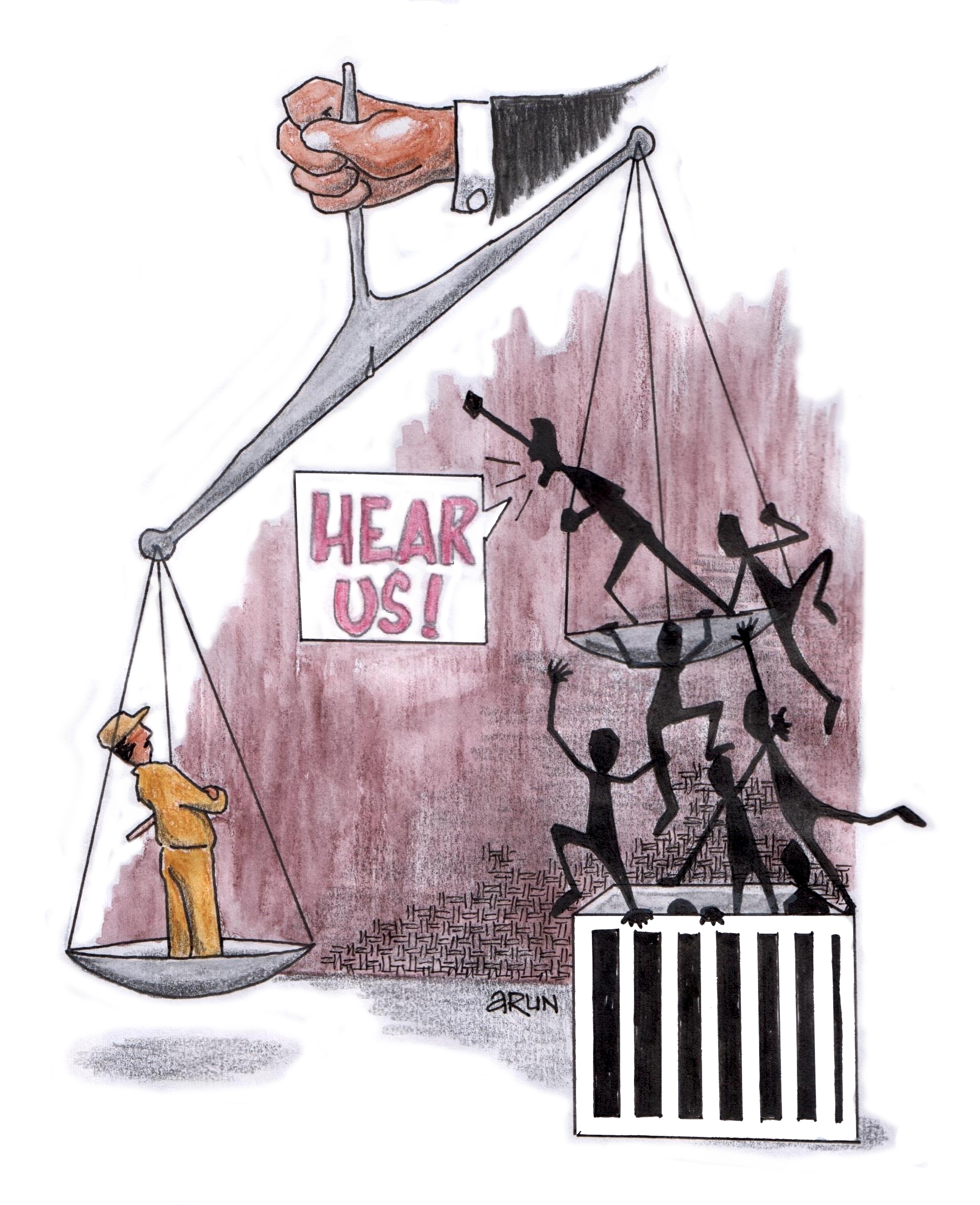
The Tribune / by Hammad Safraz
Those who question the government’s policies on rights and freedoms, find themselves in an endless chase for justice
The world’s largest democracy, or so the slogan goes, has perfected a quiet kind of cruelty against those who speak truth to power. For activists and journalists who question Narendra Modi’s Bharatiya Janata Party (BJP) government, the punishment is arbitrary detention without trial, stretched endlessly into a legal void where no charge is filed and no freedom is granted. …
The first big case, Ria Chakrabarty said, was actually that of anti-caste and tribal activists who rallied at Bhima Koregaon in Maharashtra and were later attacked by Hindu nationalist mobs. … Both the Supreme Court and the UN have judged that many of the detainees were held with no evidence of terrorism. “But this case is important to understand,” she said, “because then the Indian Home Ministry started using the same playbook against Muslim activists who would lead protests subjected to Hindu nationalist violence, and later, primarily Sikh farmers protesting farm laws.”
Read more
Also read:
▪ IAPL demands release of advocate Surendra Gadling from Maharashtra jail (The Sisat Daily / March 2026)
▪ Incarceration As Politics: A Timeline Of Political Prisoners In Independent India (Outlook / Jan 2026)
▪ Justice On Hold: How India’s Trial Courts Are Creating a New Class of Political Prisoners—Those Accused Of ‘Terrorism’ (article 14 / Dec 2025)
▪ Bail for Bhima Koregaon accused highlights extraordinary delay in trial (Scroll.in / Jan 2025)
▪ How Long is Too Long? – On the Maximum Period that an Undertrial Prisoner can be Detained (Constitutional Law and Philosophy | by Hany Babu and Surendra Gadling | Oct 2024)