Bail is the Rule, Jail is the Exception: The Promise of the Constitution and the Reality of State Repression
30/08/2026
Countercurrents / by Asish Gupta
Former Maoist leader Azad alias Dana Keshav Rao, had a total of 49 cases pending against him in Odisha and Andhra Pradesh after being arrested by the police in 2011. He spent more than 15 years and 2 months in prison as an undertrial prisoner. … Finally, in August 2026, he was acquitted in all 49 cases and released from prison. A lack of sufficient evidence was one of the key grounds for his acquittal.
…
Surendra Gadling’s situation underscores a broader dilemma. Even after securing bail in the Bhima-Koregaon case, he could not be released immediately because he faced a separate case related to the 2016 Surjagarh arson, in which his bail application was pending before the Supreme Court. Thus, while a person was granted bail in one case on the ground of prolonged undertrial detention, the doors of the prison remained closed due to another case.
This illustrates a structural loophole in the Indian bail system. Read more
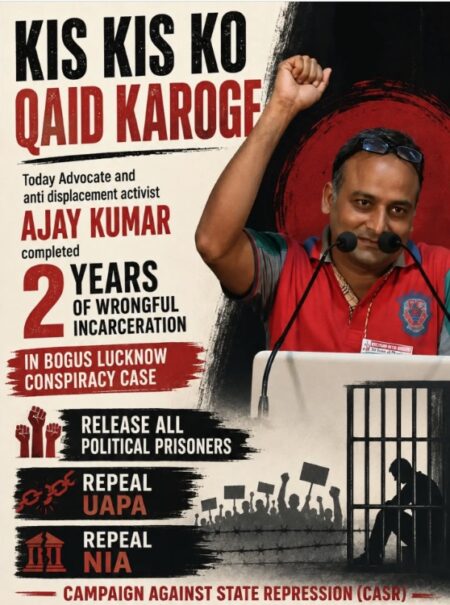
Who is Ajay Kumar? Why Has He Been Behind Bars for the Last Two Years?
30/08/2026
Campaign Against State Repression / by Campaign Against State Repression (CASR)
An activist, writer, lawyer, and intellectual, Ajay Kumar has dedicated nearly three decades of his life to the struggles of the toiling masses for liberation from oppression and exploitation.
… Ajay was actively involved in the Forum Against the War on People, which opposed attacks by state forces and the corporate-sponsored militia Salwa Judum on Adivasi communities in central India under Operation Green Hunt. He was also a founding member of the Vistapan Virodhi Jan Vikas Andolan (VVJVA), a coalition of more than 50 organisations from across the country working against the forcible displacement of peasants, particularly Adivasis, for corporate land acquisition and extractive projects.
VVJVA has campaigned against the forced displacement of peasant and Adivasi communities for the construction of big dams, industrial projects, mines, Special Economic Zones, highways, National Parks, and Smart City projects, among others.
… As a member of the Indian Association of Peoples Lawyers (IAPL), he has worked for the release of political prisoners, including those incarcerated in the Bhima Koregaon case. Read full statement
Click to enlarge
Civil Liberties Groups Seek Release of Political Prisoners
29/08/2026
Deccan Chronicle / by DC Correspondent
The Civil Liberties Committee (CLC) along with CPI and other activists demanded the release of political prisoners detained under UAPA cases.
“It is necessary that we strongly demand that the Telangana government release political prisoners. Governments of other states, including Andhra Pradesh, as well as the Centre, must release political prisoners,” Supreme Court advocate D. Suresh, CLC general secretary, said at a protest at Dharna Chowk on Saturday.
… Suresh said around 1,200 people in Chhattisgarh, 1,000 in Jharkhand and many others in Odisha, UP, Bengal, Kerala, Maharashtra and Delhi were jailed on allegations of being Maoists. He cited the case of lawyer Surendra Gadling who he said was “falsely implicated in the Bhima Koregaon case and has been unjustly languishing in jail for eight years without bail.” Read more
The TISS student’s arrest after commemorating the death anniversary of G.N. Saibaba raises fears that the machinery used to criminalise dissent, now armed with the label of “dimagi naxal”, could be ensnaring a new generation of students.
Abhirup Paul is a name that has little recall value. Note down his name, because he’s likely to be the next Surendra Gadling or the next Umar Khalid or the next Sharjeel Imam—the three men who have been languishing for years in prison and were unable to celebrate yet another Independence Day outside its forbidding walls. Like them, Paul also couldn’t celebrate, a protent that the fate of the three could also become his. Read more
The submissions recommend that prison records must identify every person with disability individually to make reasonable adjustments for them, while respecting their confidentiality.
A Kerala-based activist, whose petition highlighting the traumatic prison days of the late Professor G.N. Saibaba and Stan Swamy led the Supreme Court to form a high-powered committee to free Indian jails from the colonial yoke, suggested bringing in a mechanism to allow disabled prisoners/detainees to self-identify and declare their disabilities. Read more
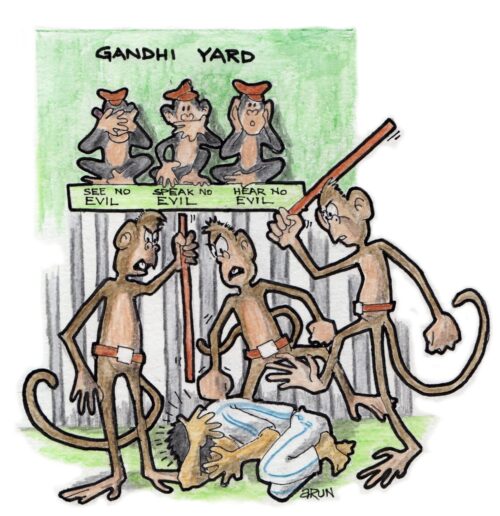
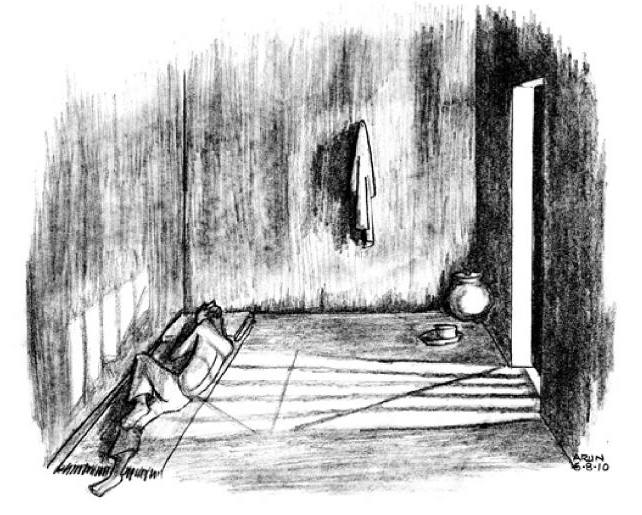
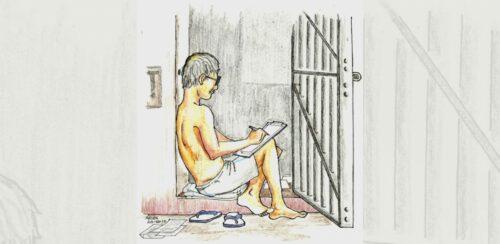
Credits: Drawing by Arun Ferreira / The Polis Project
The ‘Natural Death’ Problem in Indian Jails
26/06/2026
The Wire / by Sukanya Shantha
When prisoners die after allegedly being denied timely medical care, are those deaths truly natural? And is it fair that the very people who are accused of not providing timely medical care get to decide this?
… According to the latest NCRB data (for the year 2024), 1,960 persons died in Indian jails. Of these, 1,737 deaths were attributed to “natural causes”. When reading these figures, one must keep in mind cases like those of Basha and Khadar. Unless a judicial magistrate diligently inquires into their deaths, they too will be categorised as ‘natural deaths’ in upcoming NCRB reports. Read more
Our Criminal Justice System Overlooks Victims of Police Torture
26/06/2026
The Wire / by Edgar Kaiser and Grace Anu
The Global Torture Index 2025 classifies India as a country with “high risk” of torture and ill treatment, and the signed UN Convention Against Torture is yet to be ratified.
Today, June 26 is observed as International Day in Support of Victims of Torture.
Particularly for human rights defenders, targeted reprisal killed the lives of Fr. Stan Swamy in Bhima Koregaon (BK-16), due to refusal of medical treatment, and Prof. Saibaba, a 90% disabled activist had to face the same fate as his health started deteriorating when he was confined to an ‘anda cell’. These figures are just the tip of the iceberg of a staggering number of survivors and victim families who are systemically denied medical, psychological and social assistance. Read more
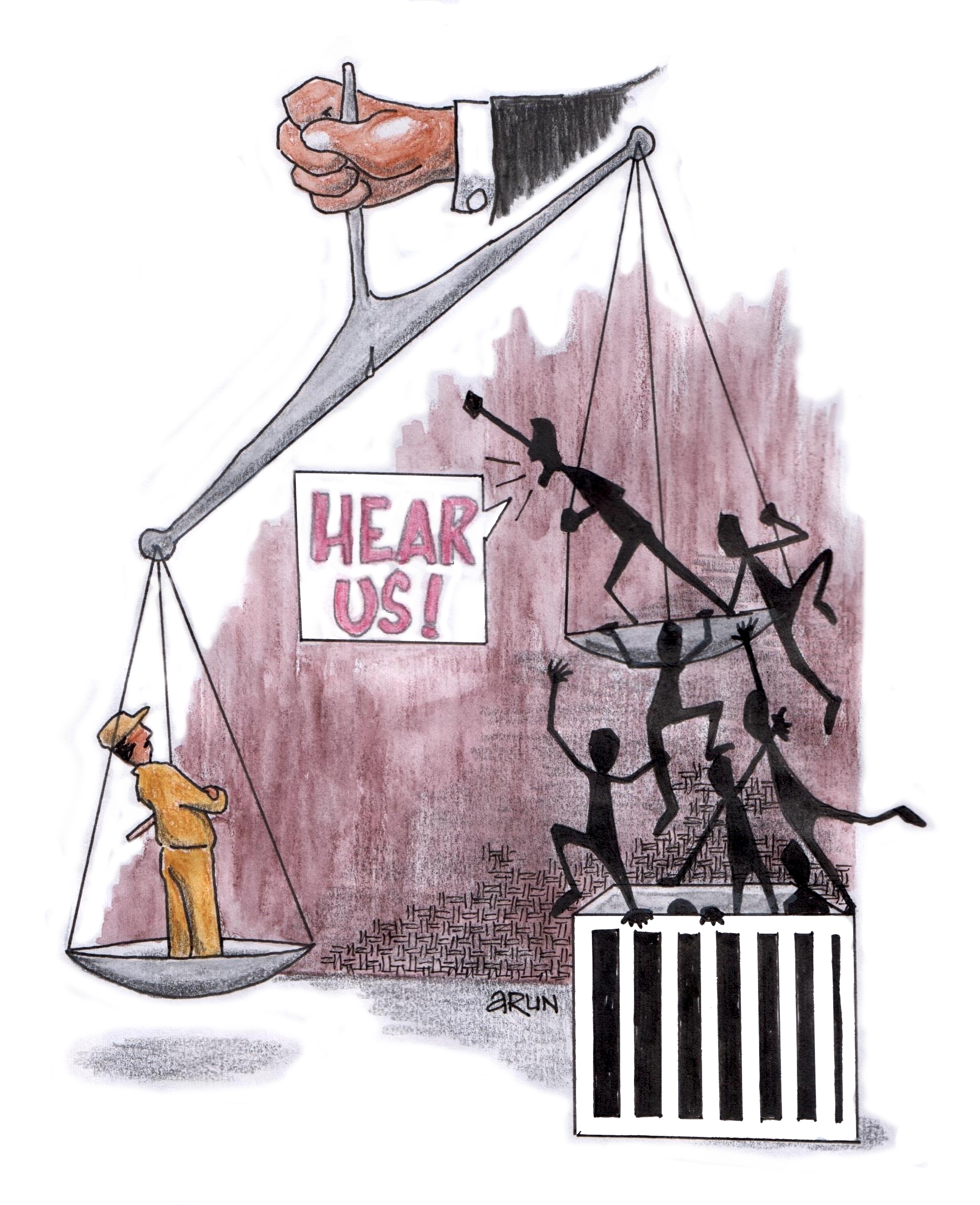
The demand for the release of political prisoners is necessary because any democracy claims pride in guaranteeing fundamental rights
The demand for the release of political prisoners today is haunted by a dangerous vagueness. As the category expands, its meaning becomes thinner.
… there is remarkably little organised effort to secure the release of political prisoners. Whatever exists has steadily retreated from sustained collective organising to the fragile and easily targeted space of social media. This shift appears logical only because the state has relentlessly criminalised even the mildest attempts to raise the issue of political imprisonment. The most chilling example remains the case of Delhi University professor G. N. Saibaba. After his arrest, a defence committee was formed to campaign for his release. At least five of its members were later arrested in the Bhima Koregaon Elgar Parishad case. Read more
Voices From Prison: Of Lives Stolen For Dissent
20/01/2026
Outlook / by Outlook News Desk
Outlook’s February 1 issue, Thou Shalt Not Dissent, shines a light on the lives of political prisoners who were slapped with anti-terrorism charges and continue to face long trials and curbing of rights.
…
In Outlook’s February 1 issue, Thou Shalt Not Dissent, first-person accounts of political activists who were slapped with anti-terrorism charges under different political regimes, explore life behind bars, the trauma, sights and sounds of a world bereft of freedom, normalcy and reason. Weaved with the accounts are stories of individuals who carry the burden of incarceration like a tumour on the face, afraid to cover it, so it doesn’t chafe, and hesitant to let it free, so it does not translate into their only identity. Read more
Voices From Prison: Mahesh Raut | A Broken Prison System Is In Dire Need Of Critical Care
22/01/2026
Outlook / by Mahesh Raut
Mahesh Raut, the youngest accused in the Bhima Koregaon case, was granted interim bail on medical grounds. Many prisoners have no hope.
What constitutes freedom? What does it constitute for the person who is confined or for the one who comes out of jail, only to get entangled in another web of chains; some similar, but for others, different from what they experienced behind bars. In a prison, your identity is reduced to just a number. You are dehumanised at the whims of authorities and burdened by numerous hurdles and difficulties to secure bail. Many are not able to come out of prison even after securing bail due to financial constraints. All these factors take a toll on the physical and mental health of prisoners. Read more
Lives Lost: How Prolonged Incarceration Failed Pandu Narote, Kanchan Nanaware, Stan Swamy
22/01/2026
Outlook / by Priyanka Tupe
Pandu Pora Narote, Kanchan Nanaware and Stan Swamy never lived to learn their innocence or guilt after years of incarceration under the UAPA. Narote was acquitted by the Bombay High Court only after his death. It was too little, too late. Nanaware and Swamy also died as undertrials. For their families and lawyers, justice exists only on paper, not in life.
Pandu Pora Narote, 33, a tribal youth from Maharashtra’s Gadchiroli district, was arrested in August 2013 on allegations of links with the banned CPI (Maoist) and its frontal organisation, the Revolutionary Democratic Front. The case later widened to include former Delhi University professor G.N. Saibaba and several others. Read more
Voices From Prison: Of Lives Stolen For Dissent
20/01/2026
Outlook / by Outlook News Desk
Outlook’s February 1 issue, Thou Shalt Not Dissent, shines a light on the lives of political prisoners who were slapped with anti-terrorism charges and continue to face long trials and curbing of rights.
…
In Outlook’s February 1 issue, Thou Shalt Not Dissent, first-person accounts of political activists who were slapped with anti-terrorism charges under different political regimes, explore life behind bars, the trauma, sights and sounds of a world bereft of freedom, normalcy and reason. Weaved with the accounts are stories of individuals who carry the burden of incarceration like a tumour on the face, afraid to cover it, so it doesn’t chafe, and hesitant to let it free, so it does not translate into their only identity. Read more
Voices From Prison: ‘In Jail, I Measured Time From One Court Date to Another’
21/01/2026
Outlook / by Shoma Sen
Women’s rights activist and professor Shoma Sen, who was arrested in 2018 for her alleged involvement in the Bhima Koregaon riots, writes how in prisons, time comes to a standstill, literally
Though it is true that I did time, it appears more as if time did me. One cloudy evening, on June 21, 2018, when I was being taken to the Yerawada jail in Pune, I knew that watches were not allowed in jail, yet I had clung on to my basic Titan watch. I had to submit it at the gate. It was returned to me, looking like a museum relic, almost six years later. Time, trapped in a brown sarkari envelope, sealed in a metal box. Time that had stopped ticking. Read more
Me Coming Out Alive Is A Miracle: Hany Babu, Bhima-Koregaon Accused, On Life Behind Bars
21/01/2026
Outlook / by Hany Babu M.T.
More than five years after his arrest under the UAPA in the Bhima Koregaon case, former Delhi University professor Hany Babu was granted bail in December 2025. He shares his experience of prison life.
Mornings start very early in jail, but they never come with an air of freedom. It has only been three to four weeks since I came out; the bail arrived quite late for me. Five years is a long time compared to my co-accused. Throughout these five years, hope never left my sight, even when I contracted Covid. But there were indeed times when a little despair did creep in. Read more
Correctional Facility Or The World Of Endless Repetition, Solitude and Boredom?
21/01/2026
Outlook / by Rona Wilson
The prison system in India, persistently mediated and nourished by its colonial and retributive sensibilities, cannot be wished away by just changing the names of the prisons as correctional facilities, writes Rona Wilson, accused in the Elgar Parishad-Maoist links case.
I had trouble in my barrack with some of the inmates smoking heavily beside me and some among them playing ludo till the wee hours. As the game intensifies with gambling, so does smoking and use of tobacco. I requested the officer-in-charge of my circle to intervene. Read more
Voices From Prison: Life After Jail Is Tough, But Surveillance, Harassment Continue, Says Sudha Bharadwaj
20/01/2026
Outlook / by Sudha Bharadwaj
I am enormously relieved that the separation from my only daughter, Maaysha, has ended. We can speak to each other every day.
A couple of weeks ago, cops in civil dress—or so they claimed to be—arrived in the society where I live in a friend’s accommodation on rent. The police have my mobile number, which, no doubt, they monitor regularly. Besides, I report to the local police station every 14 days, and I regularly attend court dates, at least once every 15 days, if not more frequently. Despite this, the police did not bother to call me. Read more
Voices From Prison: In The Isolation of the Anda Ward, We Dared To Sing, Writes Gautam Navlakha
20/01/2026
Outlook / by Gautam Navlakha
I realised that the more intense the sense of despair, the harder hope kicks in.
‘Those who speak of humanity in this system
Are thrown into prison to acquaint them
With the vocabulary of ‘criminology’’’ — Varavara Rao, Schools and Prisons
Hope and despair are basic human emotions and I believe that all human beings, now and then, swing between these two ends of the spectrum in life. I experienced these emotions acutely during my time in prison and captivity. Read more
Voices From Prison: Alienating A Poet From A Language He Deeply Loves Is Painful, Writes Varavara Rao’s Daughter
20/01/2026
Outlook / by P Vanava
The poet and activist was jailed in connection with caste violence that erupted in 2018 in Bhima Koregaon. He was 78 then. Though he was released on medical grounds in 2022, he is still confined to Mumbai. In this first-person account, his daughter Pavana writes about how multiple incarcerations could not break her father’s strength and soul
…
This wasn’t his first arrest; he has been arrested many times in the past, since the Emergency in 1975, for his political activism. I was a newborn baby (a month old), when appa was arrested. Read more
Voices From Prison: Bail Is Little Solace As I Lost My Life Anyway, Says Anand Teltumbde
19/01/2026
Outlook / by Anand Teltumbde
We became victims of two things—unjust investigation and a media trial that was used as a weapon. The Media Trial was Deeply Painful.
The tragic dimension of jail has been exhaustively mined. What remains scandalously underexplored is its comic genius. Prison is a factory of absurdity, running at full capacity every day, and I made it a habit to collect its specimens—especially during the so-called free hours, when the cells were opened each morning. This ritual began with the ceremonial clanking of batons, as guards slid them menacingly across steel bars, producing a sound—less like an alarm than a declaration of sovereignty. Read more
Voices From Prison: What Happened In Bhima Koregaon Could Happen To You
20/01/2026
Outlook / by Alpa Shah
The Bhima Koregaon case is not only about those who were imprisoned. It is also about the fate of democracy itself
There are things in life that somehow wrap themselves around us. Things we never would have dreamed of doing—ideas that once seemed dangerous, crazy, or simply foolish. They arrive quietly, almost by accident, and before we know it, they surround us, occupy our thoughts, and slowly take over. Until one day, there is no turning back, and we can’t imagine thinking about anything else. Read more
▪ THE BK-16 PRISON DIARIES SERIES (THE POLIS PROJECT / JUNE 2024)
Credits: Drawing by Arun Ferreira / The Polis Project
Credits: Drawing by Arun Ferreira / The Polis Project
Credits: Drawing by Arun Ferreira / The Polis Project
Credits: Drawing by Arun Ferreira / The Polis Project
Credits: Drawing by Arun Ferreira / The Polis Project
To mark six years of the arbitrary arrests and imprisonment of political dissidents in the Bhima Koregaon case, The Polis Project is publishing a series of writings by the BK-16, and their families, friends and partners. By describing various aspects of the past six years, the series offers a glimpse into the BK-16’s lives inside prison, as well as the struggles of their loved ones outside. Each piece in the series is complemented by Arun Ferreira’s striking and evocative artwork.
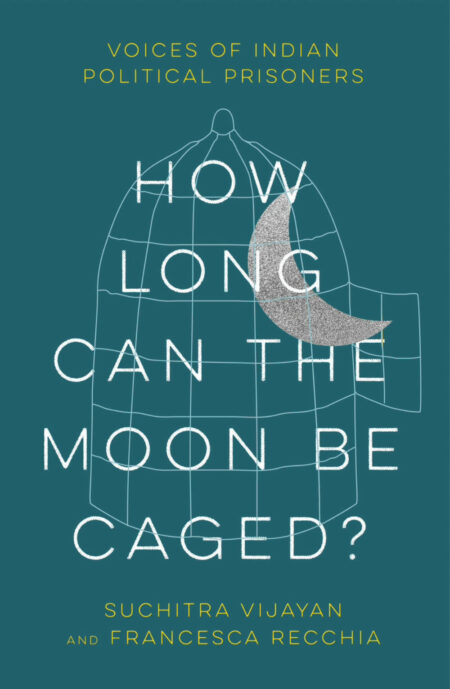
▪ How Long Can the Moon Be Caged? Voices of Indian Political Prisoners
How Long Can the Moon Be Caged? includes visual testimonies and prison writings from those falsely accused of inciting the Bhima Koregaon violence, by student leaders opposing the new discriminatory citizenship law passed in 2020, and by activists from the Pinjra Tod’s movement. In bringing together these voices, the book celebrates the courage, humanity and moral integrity of those jailed for standing in solidarity with marginalised and oppressed communities.
Authors: Suchitra Vijayan and Francesca Recchia
Publishing Date: Aug 2023
Publisher: Pluto Press
Pages: 247 Read more / order
Imperative for Understanding Evolution of Human Rights Paradigm: Whither Human Rights in India
‘Whither Human Rights in India’ is a comprehensive exploration of how the devastation of human rights over the parts decade symbolise a crucial departure or rupture, manifesting a new fascist paradigm
‘Whither Human Rights in India,’ edited by Anand Teltumbde, is a critical and outstanding collection of essays navigating India’s human rights landscape, exploring diverse arenas Ike majoritarianism, state violence, systemic inequality (Dalits, Adivasis, Muslims), judicial issues, hate speech, and threats to vulnerable groups.
Resurrecting the outlook of Father Stan Swamy and Prof. G. N. Saibaba, Whither Human Rights in India is both a chronicle of resistance and a call to reshape the future of democracy and human dignity. Read more
▪ Whither Human Rights in India
Critical Essays on Democracy, State Power, Civil Liberties & the Lived Realities of Dalits, Adivasis, Minorities & More
Whither Human Rights in India, edited by Anand Teltumbde, one of India’s prominent human rights activists, is a searing and indispensable anthology that brings together some of the most important thinkers, activists and human rights defenders of our time. The essays trace the historical and ideological roots of India’s human rights discourse—from colonial legacies and constitutional guarantees to the challenges posed by majoritarian politics, state violence and systemic inequality.
Mumbai Police Book TISS Students For Maoist-Linked GN Saibaba Death Anniversary; Rekindles 2017 Incident Of Taking Students To Naxal Training Camps In Forest
14/10/2025
The Communemag / by The Commune
The Mumbai Police on 13 October 2025 registered a First Information Report (FIR) against at least ten students of the Tata Institute of Social Sciences (TISS) for allegedly organizing an event to commemorate the death anniversary of former Delhi University professor GN Saibaba.
… This incident is not the first time TISS has been linked to allegations involving Naxalite activities. In 2018, as per an India Today report, the Maharashtra Police had claimed that accused activist Mahesh Raut, an alumnus of TISS, had taken students from the institute to meet underground Maoist leaders in forest areas. Read more
When a spontaneous gathering of students is criminalised
15/10/2025
Groundxero / by freespeechcollective
Recording the sequence of events and observations on the current events unfolding in TISS, Mumbai, from students’ perspective
What is the price of political engagement and learning in a higher educational institute in India? It seems that young people who seek to read, talk to each other and understand any issue are slapped with FIRs before they can fully make up their minds on what stance to take.
On Sunday, 12 October 2025, students at the Tata Institute of Social Sciences, Mumbai gathered to read a few poems written by Professor GN Saibaba to mark his death anniversary. They gathered in a peaceful manner, read the poems, placed a few candles around a photograph of Professor Saibaba and dispersed—all in about ten minutes. For many of the students, this year has been the first time they have learnt of the scholar and activist’s life, work, and death. The gathering came as a spontaneous response to discovering his poems. Read more
▪ Video: State’s Job is to Serve People, Not Punish Them: G N Saibaba
en | 38:33 | 2024
Newsclick / by Newsclick Team
Former DU professor G.N. Saibaba, who passed away in Hyderabad on Saturday, had recounted his harrowing ordeal during 10 years in jail at a press conference in New Delhi in March this year. Watch video
Video: Sudhir Dhawale on Mental Health Crisis in Indian Prisons / Lives Fading in Silence
Video | Sudhir Dhawale Spoke With Outlook About Mental Health Crisis in Indian Prisons
01/10/2025
Outlook / by Priyanka Tupe
hindi /en | 46:58 | 2025
Indian Human Rights activist Sudhir Dhawale, imprisoned under UAPA in Bhima Koregaon case, exposes India’s prison mental health crisis: overcrowding, absent psychiatric care, caste-based labor, and systematic erosion of dignity. Watch video
Taloja Jail: Lives Fading in Silence Behind Iron Walls
28/09/2025
Outlook / by Sudhir Dhawale
The author, who spent 10 years in jail, details the painful experiences of the inmates and the cold attitude of the authorities
Narya was a prisoner in Taloja Central Jail, Navi Mumbai. He was young and had already spent a few years in jail. With overgrown hair, a thick moustache and a full-grown beard, he was an eccentric who would roam the prison yard with complete disregard. Since he routinely got into quarrels with the jailer and physical fights with other inmates, people were wary of him. Read more
An Imprisoned Mind | Mental Health Challenges Among India’s Political Prisoners
28/09/2025
Outlook / by Apeksha Priyadarshini
In Indian prisons, where the incarcerated are robbed of basic human dignity, conversations about mental health are a formidable challenge.
…
The impact of the prison architecture on the mental health of prisoners is also brought up by Gautam Navlakha, a septuagenarian human rights defender and journalist, who was arrested in the now infamous ‘Bhima Koregaon’ (BK 16) case—where 16 activists, lawyers and teachers were charged with incitement to riots at Koregaon Bhima in January 2018, following the “Elgar Parishad’ conclave that they participated in on December 31, 2017 at Pune.
…. Jenny Rowena, partner of another BK 16 undertrial prisoner Prof Hany Babu, shares Navlakha’s views on what incarceration robs from an individual. Babu, who is also lodged in Taloja Central jail, completed five years of incarceration as an undertrial this July. Read more
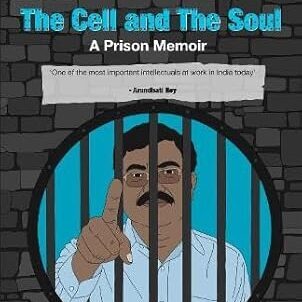
Noted social activist Anand Teltumbde entered the Taloja Central Prison as accused number 10 in the Bhima Koregaon case and spent 31 months as an undertrial until he was released on bail. As an intellectual who was stripped of his freedom, he lays bares the chilling realities of India’s prisons in his gut-wrenching prison memoir. Part memoir, part diary, Cell and the Soul is a descent into the heart of India’s carceral state, ripping open the belly of the beast-the prison industrial complex-and exposing the brutal, pulsating injustice within. Read more / order
July 28, 2025 marks the fifth year of Babu’s arrest. In the past five years, he has written several times to his wife, daughter and other family members.
The best way to harm an academic is to simply lock them out of their computer and deny them access to their years of research. This is exactly what had happened to Hany Babu M.T, a professor at the Delhi University, when the Pune police had first raided his house on September 10, 2019. Ten months later, on July 28, 2020, Babu was arrested, as one of the 16 persons implicated in the Elgar Parishad case. Read more
Also watch/read:
▪ Video: Who is Hany Babu, the Delhi University professor and anti-caste activist jailed under UAPA in the Bhima Koregaon case? (Maktoob – @Maktoobmedia / Sep 12, 2025) en | 10:57min | 2025 Watch on YouTube