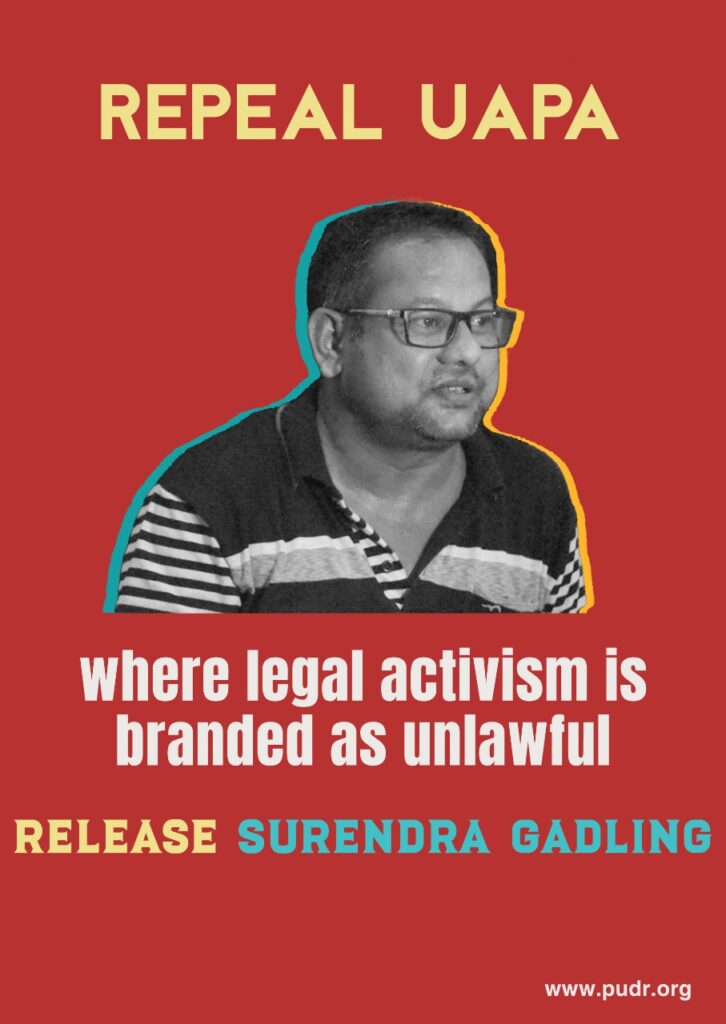
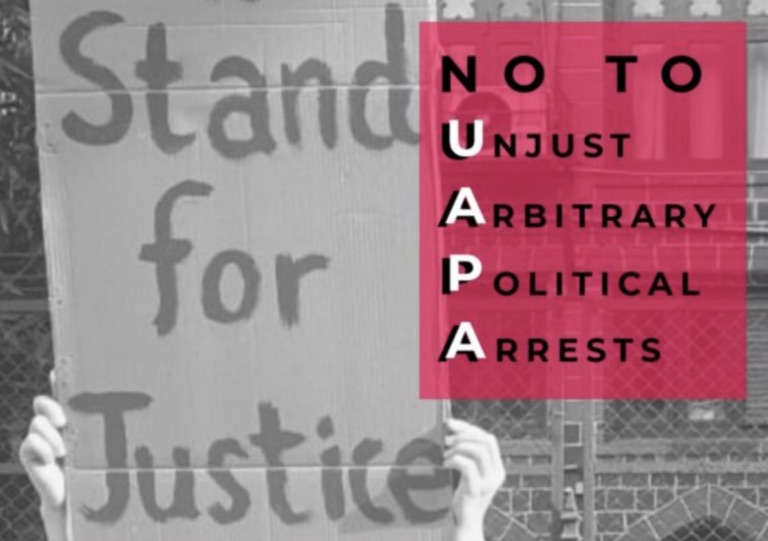
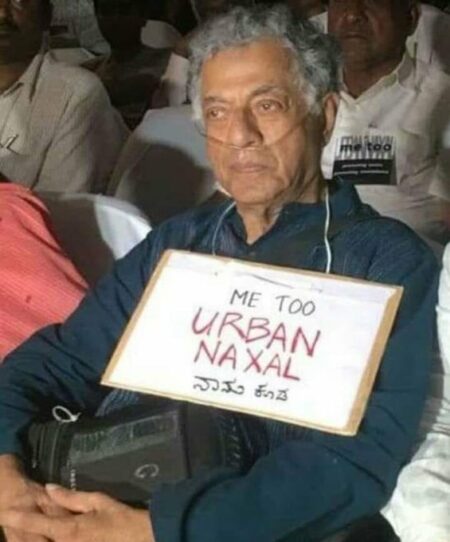
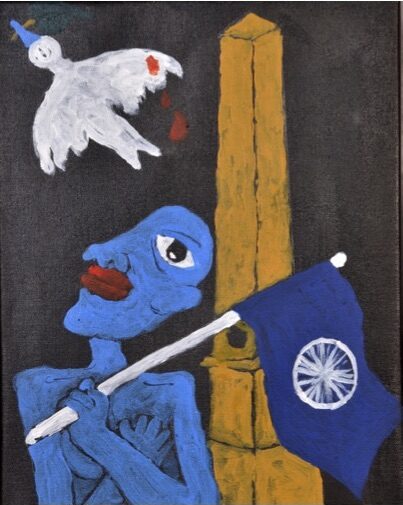
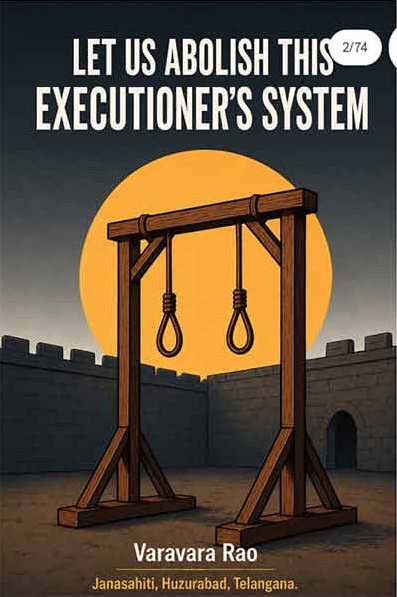
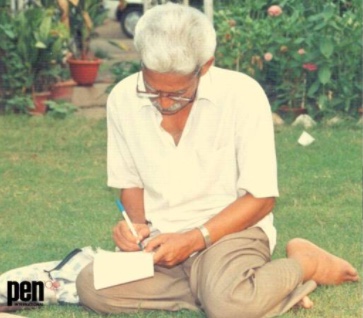
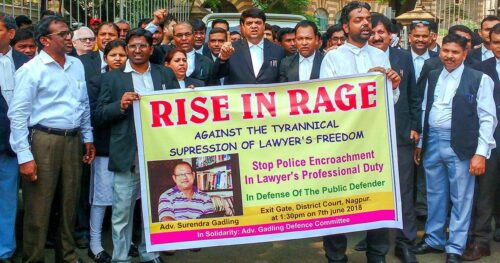
Sagar Gorkha, Ramesh Gaichor. Poster by #bakeryprasad
Seven Years On, Bail Finally For Gorkhe & Gaichor In Bhima Koregaon Case
23/01/2026
Outlook / by Priyanka Tupe
The Bombay high court on Friday granted bail to Sagar Gorkhe & Ramesh Gaichor in the Bhima Koregaon case. Total 16 accused were arrested in the case, of which only lawyer Surendra Gadling remains in jail now, denied bail.
The Bombay High Court on Friday granted interim bail to Sagar Gorkhe and Ramesh Gaichor in the Bhima Koregaon case, noting the prolonged incarceration of the two accused even as trial in the matter has not commenced after seven years. The activists have been accused of having links with banned Maoist organisations. Read more
Bombay HC Grants Bail To Activists Sagar Gorkhe & Ramesh Gaichor
23/01/2026
Free Press Journal / by Urvi Mahajani
The Bombay High Court granted bail to activists Sagar Gorkhe and Ramesh Gaichor in the Elgar Parishad Maoist links case, citing parity with other accused already released. Arrested in 2020, they must furnish bail bonds and report monthly to the NIA. The case involves alleged provocative speeches at a 2017 event that sparked violence in Maharashtra. Trial delays cited.
The Bombay High Court on Friday granted bail to two accused in the Elgar Parishad Maoist links case — activists Sagar Gorkhe and Ramesh Gaichor — on grounds of parity. Read more
NIA court denies Mahesh Raut permission to travel to Kerala for medical treatment
Credits: Drawing by Arun Ferreira / The Polis Project
NIA court denies Mahesh Raut permission to travel to Kerala for medical treatment
23/01/2026
Hindustan Times / by Vikrant Jha
The court said adequate treatment options are available in Mumbai and permitting him to travel to another state would dilute territorial restrictions imposed by the Bombay High Court
A special National Investigation Agency (NIA) court has rejected an application filed by Bhima Koregaon case accused Mahesh Raut seeking permission to travel to Kerala for medical treatment. The court said adequate treatment options are available in Mumbai and permitting him to travel to another state would dilute territorial restrictions imposed by the Bombay High Court. Read more
Mahesh Raut | A Broken Prison System Is In Dire Need Of Critical Care
22/01/2026
Outlook / by Mahesh Raut
Mahesh Raut, the youngest accused in the Bhima Koregaon case, was granted interim bail on medical grounds. Many prisoners have no hope.
What constitutes freedom? What does it constitute for the person who is confined or for the one who comes out of jail, only to get entangled in another web of chains; some similar, but for others, different from what they experienced behind bars. In a prison, your identity is reduced to just a number. You are dehumanised at the whims of authorities and burdened by numerous hurdles and difficulties to secure bail. Many are not able to come out of prison even after securing bail due to financial constraints. All these factors take a toll on the physical and mental health of prisoners. Read more
Explained: The 2016 Surjagarh arson case, the Elgaar link, and why the Supreme Court is intervening now
22/01/2026
The Indian Express / by Sadaf Modak
Surendra Gadling has been judicially detained for seven years without a trial. He is accused in the 2016 Surjagarh arson case and the 2018 Elgaar Parishad case.
The Supreme Court on Wednesday (January 21) said that it would order to expedite proceedings against lawyer-activist Surendra Gadling in the 2016 Surjagarh arson case. Gadling sought bail in the case, and said that he has been behind bars for seven years without a trial since his arrest in 2019.
Gadling, lodged in a Mumbai jail, is also in judicial custody in the Elgaar Parishad case since 2018; the trial in the case is yet to begin. Read more
‘No Judge Or Prosecutor In NIA Court, 7 Yrs Custody Without Trial’: Surendra Gadling To Supreme Court In Bail Plea
21/01/2026
Live Law / by Debby Jain
The Court adjourned the matter saying it will ascertain from the HC Chief Justice whether a judge is there in the NIA court.
The Supreme Court today adjourned lawyer-activist Surendra Gadling’s bail plea in the 2016 Gadchiroli arson case by a month, while granting time for document inspection. A bench of Justices JK Maheshwari and Vijay Bishnoi heard the matter and said that it would ascertain from the Bombay High Court Chief Justice whether any judge is posted in the concerned NIA court. Read more
7 years without trial: Supreme Court defers Surendra Gadling’s bail plea in Surajgarh arson case again
21/01/2026
Bar & Bench / by Ritwik Choudhury
“There is no case against me on merits. I am in jail for 7 years! What is this country coming to?” Gadling’s counsel told the Court today.
The Supreme Court on Wednesday deferred by one more month the bail application filed by lawyer-activist Surendra Gadling in connection with the 2016 Surajgarh arson case. Read more
Voices From Prison: Mahesh Raut | A Broken Prison System Is In Dire Need Of Critical Care
22/01/2026
Outlook / by Mahesh Raut
Mahesh Raut, the youngest accused in the Bhima Koregaon case, was granted interim bail on medical grounds. Many prisoners have no hope.
What constitutes freedom? What does it constitute for the person who is confined or for the one who comes out of jail, only to get entangled in another web of chains; some similar, but for others, different from what they experienced behind bars. In a prison, your identity is reduced to just a number. You are dehumanised at the whims of authorities and burdened by numerous hurdles and difficulties to secure bail. Many are not able to come out of prison even after securing bail due to financial constraints. All these factors take a toll on the physical and mental health of prisoners. Read more
Lives Lost: How Prolonged Incarceration Failed Pandu Narote, Kanchan Nanaware, Stan Swamy
22/01/2026
Outlook / by Priyanka Tupe
Pandu Pora Narote, Kanchan Nanaware and Stan Swamy never lived to learn their innocence or guilt after years of incarceration under the UAPA. Narote was acquitted by the Bombay High Court only after his death. It was too little, too late. Nanaware and Swamy also died as undertrials. For their families and lawyers, justice exists only on paper, not in life.
Pandu Pora Narote, 33, a tribal youth from Maharashtra’s Gadchiroli district, was arrested in August 2013 on allegations of links with the banned CPI (Maoist) and its frontal organisation, the Revolutionary Democratic Front. The case later widened to include former Delhi University professor G.N. Saibaba and several others. Read more
Voices From Prison: Of Lives Stolen For Dissent
20/01/2026
Outlook / by Outlook News Desk
Outlook’s February 1 issue, Thou Shalt Not Dissent, shines a light on the lives of political prisoners who were slapped with anti-terrorism charges and continue to face long trials and curbing of rights.
…
In Outlook’s February 1 issue, Thou Shalt Not Dissent, first-person accounts of political activists who were slapped with anti-terrorism charges under different political regimes, explore life behind bars, the trauma, sights and sounds of a world bereft of freedom, normalcy and reason. Weaved with the accounts are stories of individuals who carry the burden of incarceration like a tumour on the face, afraid to cover it, so it doesn’t chafe, and hesitant to let it free, so it does not translate into their only identity. Read more
Voices From Prison: ‘In Jail, I Measured Time From One Court Date to Another’
21/01/2026
Outlook / by Shoma Sen
Women’s rights activist and professor Shoma Sen, who was arrested in 2018 for her alleged involvement in the Bhima Koregaon riots, writes how in prisons, time comes to a standstill, literally
Though it is true that I did time, it appears more as if time did me. One cloudy evening, on June 21, 2018, when I was being taken to the Yerawada jail in Pune, I knew that watches were not allowed in jail, yet I had clung on to my basic Titan watch. I had to submit it at the gate. It was returned to me, looking like a museum relic, almost six years later. Time, trapped in a brown sarkari envelope, sealed in a metal box. Time that had stopped ticking. Read more
Me Coming Out Alive Is A Miracle: Hany Babu, Bhima-Koregaon Accused, On Life Behind Bars
21/01/2026
Outlook / by Hany Babu M.T.
More than five years after his arrest under the UAPA in the Bhima Koregaon case, former Delhi University professor Hany Babu was granted bail in December 2025. He shares his experience of prison life.
Mornings start very early in jail, but they never come with an air of freedom. It has only been three to four weeks since I came out; the bail arrived quite late for me. Five years is a long time compared to my co-accused. Throughout these five years, hope never left my sight, even when I contracted Covid. But there were indeed times when a little despair did creep in. Read more
Correctional Facility Or The World Of Endless Repetition, Solitude and Boredom?
21/01/2026
Outlook / by Rona Wilson
The prison system in India, persistently mediated and nourished by its colonial and retributive sensibilities, cannot be wished away by just changing the names of the prisons as correctional facilities, writes Rona Wilson, accused in the Elgar Parishad-Maoist links case.
I had trouble in my barrack with some of the inmates smoking heavily beside me and some among them playing ludo till the wee hours. As the game intensifies with gambling, so does smoking and use of tobacco. I requested the officer-in-charge of my circle to intervene. Read more
Voices From Prison: Life After Jail Is Tough, But Surveillance, Harassment Continue, Says Sudha Bharadwaj
20/01/2026
Outlook / by Sudha Bharadwaj
I am enormously relieved that the separation from my only daughter, Maaysha, has ended. We can speak to each other every day.
A couple of weeks ago, cops in civil dress—or so they claimed to be—arrived in the society where I live in a friend’s accommodation on rent. The police have my mobile number, which, no doubt, they monitor regularly. Besides, I report to the local police station every 14 days, and I regularly attend court dates, at least once every 15 days, if not more frequently. Despite this, the police did not bother to call me. Read more
Voices From Prison: In The Isolation of the Anda Ward, We Dared To Sing, Writes Gautam Navlakha
20/01/2026
Outlook / by Gautam Navlakha
I realised that the more intense the sense of despair, the harder hope kicks in.
‘Those who speak of humanity in this system
Are thrown into prison to acquaint them
With the vocabulary of ‘criminology’’’ — Varavara Rao, Schools and Prisons
Hope and despair are basic human emotions and I believe that all human beings, now and then, swing between these two ends of the spectrum in life. I experienced these emotions acutely during my time in prison and captivity. Read more
Voices From Prison: Alienating A Poet From A Language He Deeply Loves Is Painful, Writes Varavara Rao’s Daughter
20/01/2026
Outlook / by P Vanava
The poet and activist was jailed in connection with caste violence that erupted in 2018 in Bhima Koregaon. He was 78 then. Though he was released on medical grounds in 2022, he is still confined to Mumbai. In this first-person account, his daughter Pavana writes about how multiple incarcerations could not break her father’s strength and soul
…
This wasn’t his first arrest; he has been arrested many times in the past, since the Emergency in 1975, for his political activism. I was a newborn baby (a month old), when appa was arrested. Read more
Voices From Prison: Bail Is Little Solace As I Lost My Life Anyway, Says Anand Teltumbde
19/01/2026
Outlook / by Anand Teltumbde
We became victims of two things—unjust investigation and a media trial that was used as a weapon. The Media Trial was Deeply Painful.
The tragic dimension of jail has been exhaustively mined. What remains scandalously underexplored is its comic genius. Prison is a factory of absurdity, running at full capacity every day, and I made it a habit to collect its specimens—especially during the so-called free hours, when the cells were opened each morning. This ritual began with the ceremonial clanking of batons, as guards slid them menacingly across steel bars, producing a sound—less like an alarm than a declaration of sovereignty. Read more
Voices From Prison: What Happened In Bhima Koregaon Could Happen To You
20/01/2026
Outlook / by Alpa Shah
The Bhima Koregaon case is not only about those who were imprisoned. It is also about the fate of democracy itself
There are things in life that somehow wrap themselves around us. Things we never would have dreamed of doing—ideas that once seemed dangerous, crazy, or simply foolish. They arrive quietly, almost by accident, and before we know it, they surround us, occupy our thoughts, and slowly take over. Until one day, there is no turning back, and we can’t imagine thinking about anything else. Read more
▪ THE BK-16 PRISON DIARIES SERIES (THE POLIS PROJECT / JUNE 2024)
Credits: Drawing by Arun Ferreira / The Polis Project
To mark six years of the arbitrary arrests and imprisonment of political dissidents in the Bhima Koregaon case, The Polis Project is publishing a series of writings by the BK-16, and their families, friends and partners. By describing various aspects of the past six years, the series offers a glimpse into the BK-16’s lives inside prison, as well as the struggles of their loved ones outside. Each piece in the series is complemented by Arun Ferreira’s striking and evocative artwork.
▪ How Long Can the Moon Be Caged? Voices of Indian Political Prisoners
How Long Can the Moon Be Caged? includes visual testimonies and prison writings from those falsely accused of inciting the Bhima Koregaon violence, by student leaders opposing the new discriminatory citizenship law passed in 2020, and by activists from the Pinjra Tod’s movement. In bringing together these voices, the book celebrates the courage, humanity and moral integrity of those jailed for standing in solidarity with marginalised and oppressed communities.
Authors: Suchitra Vijayan and Francesca Recchia
Publishing Date: Aug 2023
Publisher: Pluto Press
Pages: 247 Read more / order
Koregaon Bhima panel tells chief secretary to submit info on letter sought by Ambedkar
Bhima Koregaon 2018. Graphic by Arun Ferreira & Vernon Gonsalves.
The Indian Express / by Chandan Haygunde
Commission Summons Maharashtra Chief Secretary Over Sharad Pawar’s Alleged Secret Note to Uddhav Thackeray.
The Koregaon Bhima Commission of Inquiry has directed the Chief Secretary of Maharashtra to submit information regarding a letter sought by VBA president and Dalit leader Prakash Ambedkar.
In his application filed before the Commission in February last year, Ambedkar had claimed that Nationalist Congress Party NCP (SP) chief Sharad Pawar had on January 24, 2020 given a letter to then chief minister Uddhav Thackeray, claiming the violence (in Koregaon Bhima on January 1, 2018) was a conspiracy hatched by the previous government under the leadership of Devendra Fadnavis. Read more
The Supreme Court’s refusal to grant bail to Umar Khalid and Sharjeel Imam, while accepting the bail pleas of five other accused in the same case, is not merely a judicial order affecting two individuals. It marks a deeply troubling moment for constitutional democracy in India.
…
Silence transforms injustice, more so when it has a communal colour, into routine governance. When there is hesitation to challenge unjust court orders, to oppose political persecution carried out through lawless laws like UAPA, whether in the Delhi violence cases, the Bhima Koregaon prosecutions or the NewsClick case, the ruling regime faces no real political cost for its repression, all under the pretext of “national security.” In such a political climate, even the custodial death of a Stan Swamy — caused by the sheer cruelty of denying bail and even basic facilities despite his serious health conditions — becomes normalised. Read more
How Not To Defend Umar Khalid
16/01/2026
The Wire / by Ajay Gudvarthy
The problem with Umar for the current regime is his refusal to be constrained within a Muslim body and identity. Very much similar to a Dalit like Anand Teltumbde who is not Dalit enough because he speaks of right to education and corporate Hindutva.
Umar Khalid is arrested not because he is a Muslim. He is under detention because he does not wear his Muslim identity on his sleeves. He remains incarcerated not because he protested against the Citizenship Amendment Act (CAA) but because he was agitated about what is happening to the tribals in central India and was resisting the damage being done to the economy that was emaciating the working poor. Read more
Shadows of Judicial Indiscipline: On the Supreme Court’s bail denial to Umar Khalid and Sharjeel Imam
07/01/2026
The Leaflet / by Indira Jaising
In both the Bhima Koregaon and Delhi riots cases, a wrongful invoking of UAPA and obdurate refusal to follow precedent on delay in trial, raise legitimate questions on the independence of the judiciary.
At the heart of the controversy relating to the denial of bail to Sharjeel Imam and Umar Khalid is a simple question: what is the crime that they have committed? What if they have committed no crime at all under the Unlawful Activities (Prevention) Act, 1967? Would bail still have been denied to them? Read more
From Protest to Persecution: The Supreme Court’s defining Moment in Delhi Riot Case
07/01/2026
PUDR / by PUDR
On 5 January 2026, the Supreme Court delivered its first substantive order in the so-called ‘Delhi riots conspiracy case’ of FIR 59/2020 under UAPA, to grant bail to five (Gulfisha Fatima, Shifa ur Rehman, Meeran Haider, Md Saleem Khan and Shadab Ahmad) and reject the bail of two (Umar Khalid and Sharjeel Imam).
… the Supreme Court walks back on its own precedent in Vernon Gonsalves, which held that in determining the existence of a prima facie case to deny bail under UAPA, courts are empowered to look into the probative value or patent inadmissibility of prosecutorial materials. In the order of 5 January 2026, the Supreme Court states: “the inquiry is one of statutory plausibility, not evidentiary sufficiency”. Read full statement
When a Government Targets Its Citizens
07/01/2026
Countercurrents.org / by Hiren Gohain
Does anyone remember the Bhima Koregaon incident now? Certain well-known people active and well-regarded for their work in academic areas as well as in social action to bring justice to victims of state repression and social discrimination as well as human rights violations,had been detained following midnight arrests on hair-raising charges of conspiring to assassinate the Prime Minister and destroy the state. It had shaken the fragile world of the media, though not the workaday world. Read more
Justice Delayed, Selectively Denied
05/01/2026
Youth Ki Awaaz / by Geetika Kaur
The denial of bail to Umar Khalid this week is not an isolated legal decision. It sits within a larger and deeply disturbing pattern in India’s criminal justice system, one where activists, students, lawyers, and environmentalists languish in jail for years without conviction, while those convicted of rape, murder, or mass violence repeatedly find the doors of prison opening for them.
… Stan Swamy died in custody after repeated denial of bail despite his age and illness. Sudha Bharadwaj spent years in jail before being granted bail, not because she was acquitted, but because prolonged incarceration without trial became legally indefensible. Gautam Navlakha remained under incarceration and house arrest for years on allegations that rested largely on contested digital evidence. Read more
The spectacle of justice in the Delhi riots case is cover for polarisation and violence
06/01/2026
Scroll.in / by Akash Bhattacharya
In the six years since, a series of incidents in the national capital have intensified this schism while Umar Khalid and Sharjeel Imam remain incarcerated.
The capital of India, Delhi is no stranger to political violence. But the Delhi riots of 2020 set a new benchmark. The violence not only ended lives and livelihoods, it also transformed the city’s social and political landscape for the worse. Read more
‘Whither Human Rights in India’ is a comprehensive exploration of how the devastation of human rights over the parts decade symbolise a crucial departure or rupture, manifesting a new fascist paradigm
‘Whither Human Rights in India,’ edited by Anand Teltumbde, is a critical and outstanding collection of essays navigating India’s human rights landscape, exploring diverse arenas Ike majoritarianism, state violence, systemic inequality (Dalits, Adivasis, Muslims), judicial issues, hate speech, and threats to vulnerable groups.
Resurrecting the outlook of Father Stan Swamy and Prof. G. N. Saibaba, Whither Human Rights in India is both a chronicle of resistance and a call to reshape the future of democracy and human dignity. Read more
▪ Whither Human Rights in India
Critical Essays on Democracy, State Power, Civil Liberties & the Lived Realities of Dalits, Adivasis, Minorities & More
Whither Human Rights in India, edited by Anand Teltumbde, one of India’s prominent human rights activists, is a searing and indispensable anthology that brings together some of the most important thinkers, activists and human rights defenders of our time. The essays trace the historical and ideological roots of India’s human rights discourse—from colonial legacies and constitutional guarantees to the challenges posed by majoritarian politics, state violence and systemic inequality.
PUDR / by People’s Union for Democratic Rights (PUDR)
PUDR condemns the arrest of Kranthi Chaitanya, Vice-President of the Civil Liberties Committee (Andhra Pradesh unit), and fellow activist Mohan Krishna on 9 January 2026, and their subsequent remand to judicial custody on 10 January. The FIR, based on a complaint filed by the President of the Sanatana Dharma Protection Committee, a resident of Tirupati, accuses them of erecting “provocative banners.”
…
The sections invoked in this case are non-bailable and carry a minimum sentence of seven years’ imprisonment. The arrests, coupled with the FIR’s expansive use of criminal conspiracy provisions, signal yet another attack on activists and civil liberties organisations, many of which are already under sustained pressure following the Bhima Koregaon arrests. Read full statement
India’s civic space is still rated as ‘repressed’ by the CIVICUS Monitor. The authorities persist in targeting activists, journalists, students and civil society through the misuse of draconian laws, arbitrary detention, censorship and the criminalisation of dissent. Over the past year, the Unlawful Activities (Prevention) Act (UAPA), the Foreign Contribution (Regulation) Act (FCRA), counterterrorism provisions and public order regulations have been consistently deployed to silence government critics, restrict civil society, and deter peaceful protests. Read more
Scholar Anand Teltumbde examines a country driven to a dead end, where the opposition is silent and citizens have been terrorised into normalcy
…
In an interview with Lounge, he discusses the writing of his prison memoir, why class trumps caste within the confines of prison, and the pitfalls of a caste census. Read more
▪ The Feared – Conversations with Eleven Political Prisoners Author: Neeta Kolhatkar Publishing Date: Dec 2024 Publisher: S&S India Pages: 272 Read more/order
▪ From Phansi Yard: My Year with the Women of Yerawada Author: Sudha Bhardwaj Publishing Date: Oct 2023 Publisher: Juggernaut Pages: 216 Read more/order
▪ How Long Can the Moon Be Caged? Voices of Indian Political Prisoners Authors: Suchitra Vijayan and Francesca Recchia Publishing Date: Aug 2023 Publisher: Pluto Press Pages: 247 Read more / order